The Wandering Nerve (Vagus Nerve): Unlocking Your Body’s Superhighway to Calm
- July 13, 2026
By Suzzette Tamez-Cruz, M.Sc. Biotechnology, Yoga Teacher
Have you ever wondered why a deep breath can instantly make you feel more grounded? Or why a cold splash of water on your face can snap you out of a panic? The secret lies within a remarkable nerve that acts as a biological superhighway connecting your brain to your body: the vagus nerve.
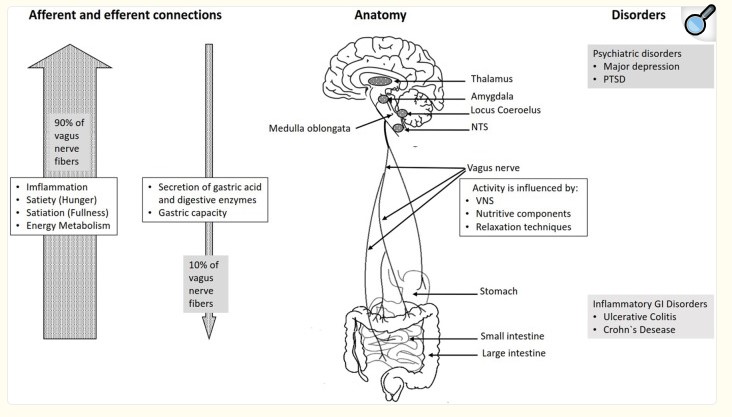
Known formally as cranial nerve X, the vagus nerve is the longest and most complex cranial nerve in your body. It embarks on an extraordinary journey, originating in your brainstem and wandering all the way down to your large intestine. As the command center for your parasympathetic nervous system—your “rest and digest” mode—it quietly dictates a host of involuntary functions that keep you alive and thriving.
In our fast-paced, stress-filled world, this vital nerve is often under-stimulated, leaving us trapped in a cycle of fight-or-flight. But here is the exciting part: we can actively tune it up, and one of the most powerful and ancient ways to do this is through yoga, particularly the dynamic practice of Kundalini Yoga.
Why a Healthy Vagus Nerve is Your Superpower
To understand why we need to “hack” this nerve, we have to look at its incredible job description. This single nerve influences nearly every major system in your body:
Your Heart and Lungs: The vagus nerve acts as a continuous regulator, keeping your resting heart rate in check and promoting steady, even breathing. It is the biological brake that slows everything down when you need to relax.
Your Digestion: Ever felt that “butterflies” sensation in your stomach when nervous? That is your vagus nerve at work. It triggers the production of digestive enzymes and coordinates the muscle contractions needed to break down your food efficiently.
The Brain-Gut Axis: Perhaps most fascinatingly, the vagus nerve functions as a bidirectional highway. It transmits a constant stream of physical and emotional data between your brain and your gut microbiota. This means your digestive health directly influences your mood, and vice versa—a powerful reminder that true wellness starts from within.
Communication and Sensation: Beyond the internal organs, the vagus nerve also controls the muscles in your vocal cords, provides taste sensations, and carries sensory information from your ear canal. It truly is everywhere!
When your vagal tone is high, you are resilient. Your heart rate variability improves, inflammation decreases, and your mood stabilizes. Low vagal tone, conversely, is linked to anxiety, depression, and chronic inflammation. Keeping this nerve active isn’t just about relaxation; it is about fortifying your brain, your immunity, and your entire being.
As Dr. Vernon Williams of Cedars-Sinai explains, “many of the activities that we associate with calmness—things like deep breathing, meditation, massage and even the experience of awe—effect changes in the brain, in part, through increasing vagus nerve activity.”
The Science of Yoga and the “Rest and Digest” Response
Yoga has long been recognized as a tool for stress reduction, but modern science is now confirming the biological mechanisms at play. Research shows that yoga directly influences the autonomic nervous system by downregulating inflammatory signals and improving heart rate variability—key markers of vagal activity.
The simple act of slow, diaphragmatic breathing (belly breathing) is a direct line to vagal activation. When you inhale, your heart rate speeds up slightly; when you exhale, your heart rate slows down. By extending the exhalation—think breathing in for a count of four and out for a count of six or eight—you amplify this parasympathetic response, physically stimulating the vagus nerve and calming the nervous system from the inside out.
Kundalini Yoga: The Targeted Approach
While all yoga is beneficial, Kundalini Yoga, often called the “Yoga of Awareness,” uses specific techniques uniquely designed to stimulate the vagus nerve. Historically, some researchers even suggested that the ancient concept of “Kundalini” could be identified with the vagus nerve itself.
Kundalini is not just about physical postures (asanas). It is a complete technology that combines:
Pranayama (Breathwork): Specific, often rapid or extended, breathing patterns that force the nervous system to reset and recharge.
Rhythmic Movement: Dynamic exercises that shake up stagnation, stimulate internal organs, and promote the flow of energy throughout the body.
Mantra and Chanting: This is where the magic truly happens. Chanting activates the muscles of your vocal cords and the back of your throat. Because the vagus nerve controls these very muscles, the specific vibrations created during chanting generate electrical activity that travels directly up the nerve, stimulating it from the “inside out.” As one expert put it, chanting is a way of “hacking your neurology to enhance the function of all the most critical aspects of your physiology.”
How to Start Your Practice Today
You don’t need a fancy device to stimulate your vagus nerve; you have everything you need within you. Here are a few ways to get started:
Belly Breathing: Take a moment right now. Place your hand on your belly. Breathe in through your nose for a count of four, feel your belly expand, and then exhale slowly through your mouth for a count of six. Repeat for five minutes.
Chant “ONG”: Sit up straight and take a deep breath. On the exhale, chant the sound “Ooooo-nnn-ggg.” Feel the vibration in your chest, throat, and even your ears. This is a classic Kundalini technique to stimulate the vagus nerve.
Try a Cold Finish: End your morning shower with a 30-second blast of cold water. This brief shock activates the “diving reflex,” which stimulates the vagus nerve and gently slows your heart rate.
The vagus nerve is the bridge between your mind and your body. By weaving practices like Kundalini Yoga into your routine, you are not just stretching your muscles; you are reinforcing that bridge, building resilience, and inviting a profound sense of calm and vitality into your life. It’s time to activate your superpower. Your body—and your brain—will thank you!