Can I Eat More If I Work Out?

Consistency and Patience

A combination of a balanced diet, a consistent exercise routine, and a stable sleep schedule is ideal when it comes to improving the current status of your health. Yet, there’s a point at which diet and exercise intertwine and make matters a bit more complicated.

You need to be patient with yourself and go one day at a time, you will find how easier it gets to just say: I will do exercise tomorrow and then next day you say the same thing and the next one.

In particular, many people wonder whether exercising more means you can eat more without negatively impacting the positive progression of your health. That’s especially the case when you consider the calories and nutrients lost through intense and frequent exercise.

Below, we’ll discuss the role that losing calories and nutrients plays in the amount of food you should be eating on days you work out.

Replacing Lost Calories

No matter what type of exercise you’re participating in, you’re burning a set number of calories based on how long and how intensely you perform the exercise.

When you burn more calories than you’re consuming throughout the average day, you’ll experience weight loss. That’s great if you’re looking to lose weight, but it’s not so great if you’re trying to build muscle and strength.

To maintain your weight on days that you exercise, you’ll need to be taking in as many calories as you’re burning through exercise.

That means eating a greater number of calories during the day!

You should try to limit the extra calories to about how many calories you burned during your workout in order to maintain your current weight. A few extra or a few less won’t make much of a difference but being a few hundred calories off can make you gain or lose weight!

Eating More Nutrients to Refuel

When you exercise, your body is using carbohydrates, fats, and proteins to provide you with the energy you need to complete your workout. Additionally, your body loses electrolytes like sodium and potassium when you exercise intensely.

After you’re done with your workout, it’s incredibly important that you replace the nutrients you lost during exercise and supply your body with the fuel it needs to continue on with your day.

Though that means eating more over the course of your day, it also means eating the right food. The “extra” food that you’re eating on days in which you work out should be nutrient-dense and help to return your body to its natural state.

The Limitations

You can eat more during the day if you’re burning calories and losing nutrients during exercise, but there are quite a few limitations.

Under no circumstances does working out enable you to consume unhealthy foods and not experience the negative health consequences associated with them. That means working out doesn’t make it okay to hit up a local fast food joint on your way home from the gym.

Coming home from the gym after a 30-minute run only to eat a cheeseburger and French fries with a large soda won’t only put you above your daily recommended calories, but it’ll also overload your body with unhealthy fats, sugars, and salt.

Rather than burning calories and improving your health, your body must now work to rid itself of the unhealthy level of these nutrients that you just consumed. It practically reverses the positive effects of your workout!

You should be replacing the number of calories that you lost and focus on replenishing the nutrients that your body craves post-workout.

Final Thoughts

In short, yes. If you’re looking to maintain your current weight, you’ll need to be consuming more calories and nutrients on the days that you’re exercising. But you need to make sure that the additional calories and nutrients you’re consuming after a workout are healthy and will support your health and fitness goals.

Finding Optimism

Optimism…it’s a four syllable word that can be harder to find than diamonds in South Africa. But believe it or not, you too can tap into the earth of your surroundings and dig up a rich store of feel-good. Here are a few ways to do that.

#1: Find laughter. These days, it isn’t hard to find. With Youtube and social media, there is not shortage of memes, videos, vines, and more to get you crackalackin. You could also rent a funny movie, watch stand up comedy, or hangout with funny people. Laughter will lead you to smiling, and smiling will lead you to feeling good. Which brings us to our next point…

#2: Turn the frown upside down. It’s hard to believe that something as smiling can improve your mood, but studies have linked outward acts of happiness to an internal shift. Practice by looking in the mirror and smiling, even it if feels cheesy, stupid, and inauthentic. Hold your smile for a minute, two minutes, five minutes…see how long you can go. Start the day off with a smile, and make a conscious effort to smile more.

#3: Use positive words. Studies have shown and confirmed what spiritual traditions have long held regarding the power of the tongue: words can literally shape the reality around us. If you want to build a more positive vibe, try using more positive words. Eliminate negative talk about yourself, and others as well.

#4: Find positive people. The impact of those we hang out with is enormous. Avoid negative influences and people who bring your down with complaining and criticism. Misery loves company, the old adage goes, and these people will quickly bring you into a downward spiral. Find friends who are upbeat, positive, and happy, and their resilience and optimism will pass on to you.

#5: Stay healthy. If you’re feeling tired and sick, it’s easy to get irritable and negative. By contrast, try maintaining an active lifestyle of healthy choices that can maximize your energy levels and build you up. It’s easier to be upbeat and happy when you feel good inside and out.

#6: Get spiritual and/or actualized. Most spiritual traditions promote a positive outlook on life. If you’re not so into organized religion, find something that can provide a positive outlet for you, like exercise, music, art, or reading. Just like using positive words can turn our perspective around, filling our hearts and minds with good stuff will help optimism come easier.

5 Ways to Stay Motivated in Business

If you own your own business or are an entrepreneur, you can often be faced with challenges that strike down your motivation to go on. But here are a few ways you can reign in the troops and find the gumption to keep going.

  1. Define your core values. Core values encapsulated in a mission statement will guide your company through times good and bad by helping you find direction and bringing you through turbulent times. “Making money” is not a goal that’s sure to keep you motivated when clients aren’t coming, but “delivering sustainable sources of energy” or something similarly specific will help you stay motivated towards a goal that forms the bigger picture.
  2. Take a look at the checkpoints. There may be a gap between your desired results and the actual results of what’s happened so far because your goal is monolithic and too far into the future. Take a look at smaller components to get a more accurate picture of how things are progressing, which will also bolster your motivation to continue carrying the torch.
  3. Surround yourself with friends. The people around you play a big role in your success. When it comes to running your own business, there are a lot of naysayers out there who will throw in their two cents, but take it all with a grain of salt. Instead, seek out like-minded visionaries and entrepreneurs, both at networking events and in casual contexts. Get inspiration and motivation from those in a similar station who also have an imaginative vision for the future.
  4. Remember that the grass isn’t always greener. If you’re one of those business owners who have previous experience in the nine-to-five economy, remember what it was like to sign away your schedule and practically your soul to a corporate overlord. While running your business is tough, it sure beats being underpaid, underappreciated, and overworked by someone who can just flick you away at the drop of the hat. Do you really want to return to that kind of environment?
  5. Figure out what you want. Desire is the motivating force behind almost anything, and business is no different. If you’ve pegged your desires as shallow goals like making more cash, it can be easy to get discouraged. But if you dig a little deeper and get to some core reasons for being inspired, it’s easier to stay the course—for example, a better home, providing for your family, or enjoying life to the fullest.

4 Self-Care Tips For Extra Busy People

Finding time to invest in self-care can be challenging, especially when you live an extra busy life. When your days are spent bouncing between work, family and social commitments, there can be little time left to catch your breath let alone take time to care for your physical, mental and emotional health. If you are struggling to find time left for self-care, try these four tips to incorporate good self-care habits in your routine.
1. Establish a morning routine

Starting the day right is a good way to ensure your mental and physical health is maintained. This might include a healthy breakfast, daily exercise or meditation; figure out what works for you and implement it daily. Over time this will become a habit, helping you to take some time for self-care every day.

2. Schedule time off

It can be easy to find yourself in a cycle of continuous activity, moving from one activity to the next until it seems you are just going through the motions. Make sure you don’t get lost in the chaos by scheduling some time off. It might be an afternoon away from your normal routine, or something more extravagant like a weekend away or vacation. Whatever you choose, taking a break will allow you to relax and rejuvenate.

3. Get enough sleep
It can be easy to prioritise other commitments over sleep, but the importance of sleep should not be underrated. Getting good quality sleep allows your body to heal and re-energise, helping you to perform in all areas of your life. It can also be hard to maintain a healthy lifestyle without proper sleep as we tend to make bad diet choices and avoid exercise when we are sleep deprived. Sleep is critical for physical and mental health, which is why it should be made a priority regardless of how busy you are.

4. Set realistic goals
Manage your mental health by setting realistic goals. There’s no point committing to something that is unachievable or will put so much pressure on you that you feel like a failure. Spend some time considering your aspirations and make goals that are challenging, but possible for you to reach. You also need to set realistic goals when it comes to your self-care commitments. Add things to your routine that will work long term with your lifestyle.
With limited hours in the day, it can be nearly impossible to make time for self-care. These tips should help you incorporate self-care into your schedule so that you can live life to the fullest.

Wifi Radiation Ages You FASTER? (new research)…

Even a “healthy skeptic” like me thought this sounded completely NUTS at first.

Can a tiny household electronic device make every single cell in your body age FASTER?

“There’s NO way a simple wifi router — found in 71% of all US households (1) — can harm your health, impair your sleep, or age you prematurely”, or so I thought.

But as I started reading this brand new, doctor-acclaimed book exposing the pernicious ways electromagnetic radiation can disrupt human health, I realized the unfortunate truth…

==========================================

Wifi Routers Might Be Handy, But The Radiation They Emit Stresses Your Body On A Cellular Level…

==========================================

Wifi radiation — one of the many kinds of electromagnetic fields, or “EMFs” we’re exposed to these days — has now been confirmed to be a major stressor to the human body.

It’s not that surprising that EMF signals can disrupt your body’s ability to function normally.

After all…

– Your nervous system

– Your heart

– Cell-to-cell communication

– Your brain

– Your muscles

– Your retina

…they all run on ELECTRICITY!

If you ever fracture one of your bones, the only way they’ll ever be able to glue back together is by generating low-level electric shocks — which will trigger healing. (2)

The point is this: your body is a bio-electrical machine which can, and does get disrupted by foreign EMFs signals, like those coming off your wifi router.

Fortunately, there are easy solutions you can start applying today to protect yourself:

===> How To Clean Toxic EMFs Right Out Of Your Home

==========================================

But It Gets Worse. This Cellular Stress Induced By Wifi Radiation Can Even Break Your Very DNA.

==========================================

I’m NOT one for saying these things lightly, but…

…wifi radiation might just be aging you faster than DNA-breaking, cancer-causing X-RAYS.

In one German study, researchers looked at how much 24 hours of cell phone radiation damages human DNA when compared to x-rays. The results were horrifying… (3)

What you’re seeing above is a renowned scientific research technique called the “Comet Assay”, which is used to identify substances or signals that are harmful to the human body because they break your very DNA.

The more something breaks your DNA, the longer the “tail” of the little comets you see above will be.

The conclusion? Researchers have found that 24 hours of cell phone exposure can damage your DNA as much as 1,600 chest x-rays.

==========================================

Is This Nothing But A Crazy Scare Tactic?

==========================================

The French government doesn’t think so.

In 2015, they passed national laws to ban the use of wifi in nurseries — over the fear that this new kind of EMF pollution would impair children’s growth. (4)

The inconvenient truth is — EMF pollution might just have become the #1 toxin you have to worry about at home… way before glyphosate, the kind of paint you put on your walls, or any other environmental contaminant.

==========================================

The Good News (finally!): Cleaning EMFs Right Out of Your Home Can Be Cheap, And Dead Simple…

==========================================

My colleague and Investigative Health Journalist Nicolas Pineault recently released this revolutionary guide where you’ll find simple and dirt-cheap solutions you can use to clean the worst sources of radiation right out of your home environment.

Inside, you’ll learn…

– How to automatically turn off your wifi at night using a device that costs less than 9 bucks on Amazon

– How to talk on the phone without increasing your risk of brain cancer, disrupting your blood-brain barrier and suffering from headaches

– How to safely use your laptop without blasting your hormone-producing organs with disruptive radiation, causing leaky gut or putting you at risk for autoimmune diseases

– Exactly where you should put your wifi router to make sure it doesn’t destroy your entire family’s sleep quality

– What to do if your home is near a cellphone tower, high-voltage power lines, or has one of those EMF-emitting “smart” utility meters installed

I understand this does sound “doom and gloom”, but the best you can do before tech companies are finally FORCED to create brand new, safer wireless devices is to take action.

Learn how to protect yourself today.

You can get started in a matter of seconds.

But I NEED you to take the first step — and learn the truth. It might just save your life:

===> Reduce Your EMF Exposure By 95% — And Experience Slower Aging, Better Sleep, And Incredible Mental Clarity

Be great!

Suzzette Tamez-Cruz from Abundanceflow


Sources:

  1. http://www.parksassociates.com/blog/article/pr-01102017
  2. https://www.ncbi.nlm.nih.gov/pmc/articles/PMC2762251/
  3. https://www.acma.gov.au/-/media/Technical-Regulation-Development/Issue-for-comment/IFC-11-2014/EME-Instruments–Submission-Electrosensitivity-Australia-Attachment-Dr-Isaac-Jamieson-pdf.pdf?la=en
  4. https://ehtrust.org/france-new-national-law-bans-wifi-nursery-school/

What Happens To Your Body When You Never Move?

Our culture today is experiencing a lifestyle shift unlike any other change involving generations past. As modern technology continues to skyrocket toward the future, an almost perfect negative correlation can be found in the amount of physical activity the average individual performs.

While the perils of a sedentary lifestyle are somewhat common knowledge, this article will touch on a few of some of these detriments to specific anatomical systems.

Muscular System

 A common trend you will notice as we progress in this discussion is the body’s remarkable ability to allocate resources to specific locations it deems necessary. Muscles are a direct and literally observable example of this trend.

When the muscular system is not frequently exposed to outside stresses and resistances that require muscle tissue to contract and shorten, the body notices and begins to decrease the amount of nutrients and oxygen the muscle receives.

Naturally, this leads to a reduction in overall muscle size and strength. On the contrary, if the body realizes that a muscle or group of muscles is being asked to handle an increased workout on a consistent basis, these structures will receive a greater influx of nutrients, thereby increasing in both size and force output.

Skeletal System

 Our bones are specifically designed to provide an overall framework for the body, protect vital organs, store nutrients and specific types and cells and manage the perpetual effect of gravity. When an individual’s lifestyle is devoid of adequate physical activity, the skeletal system, as with most other body systems, begins to deteriorate due to a decrease in the nourishment it receives.

The overall strength of a bone is usually described in terms of bone mineral density (BMD). Processes such as prolonged periods of inactivity and aging are marked by an increase in this parameter. Quite obviously, decreased bone mineral density is highly correlated to increase breaks and fractures, as well as reduced overall functionality an individual maintains.

The Cardiovascular System

 Your heart really is the MVP when it comes to persistence. No matter how inactive you choose to be, this organ does not follow suit. Although your heart will continue to function despite an inadequate amount of movement, it is far from immune to it.

Just a few examples of how lack of movement negatively affects the heart are a weaker, less efficient contraction, decreased oxygen uptake and obstructed flow of blood the through body. These issues force the heart to work much harder to keep you alive, which inevitably decreased the lifespan of the heart itself.

Metabolism & Bodyweight

 Probably the most obvious consequence of not moving enough is an increase in bodyweight, often times leading to obesity. Your body has a specific amount of calories it requires to maintain vital structures such as the heart, brain and liver. Whatever caloric total remaining after these systems are accounted for is allocated to provide energy towards physical activity and movement.

In a movement deficit, these leftover calories are not burned as full and must be stored somewhere in the body for a later date. As you can probably guess, one of the main storage vessels is adipose tissue or body fat. Digressing back to the effects of inactivity of muscle tissue, specifically the reduction in muscle size due to non-use, metabolism is intricately involved in this process. Lean muscle mass actually has a high demand for calories even while at rest.

The more muscle present in the body, the higher the metabolic rate becomes. To put it simply, there will actually be less of those leftover calories we previously discussed, resulting in less potential for storage in the form of fat.

Eight Awesome Psychology Tricks

  1. If you want your kids to eat broccoli, ask them if they want 2 broccoli stalks or 5, instead of just asking them if they want broccoli. This way you’ve already made the choice for them, but they’ll feel like they’re getting a great deal by choosing the amount of broccoli they want. You can expand this trick to other situations, too.
  2. To have a little fun with words, when having a conversation with someone, pick a word they say and then each time they say the word, or words close to it, smile, nod or give some type of positive affirmation, and watch them say the word all the time.
  3. Do you have a song stuck in your head that you’d like to forget? Think of the end of the song. According to the Zeignark effect, your mind tends to think of things left unfinished, so thinking of the end of the song will close the loop and allow you to get the song out of your head.
  4. To know if someone is interested in a conversation look at their feet, if they are pointing towards you, they are. If they are pointing sideways or any other direction, they aren’t.
  5. Ever get the feeling that someone is watching you, but you’re not sure? Try yawning and then glancing at your suspected stalker. If they yawn, then you know they’ve been watching you, since yawning is contagious.
  6. If you want people to take you seriously, tell them what you say is what your father taught you. People tend to believe fatherly advice inherently.
  7. Crack a joke and observe the people who are laughing around you. People who feel close to each other will be looking at each other. This is useful for discerning out friendships and other relationships.
  8. In crowded areas, look in the direction in which you intend to go and watch the walkway just open up. In busy areas and crowded streets, people tend to watch other people’s eyes to see which direction they will go so they can go the opposite way.

Kids Wild-crafting: Labrador tea

Benefits Of Labrador Tea

Skin:

If you want to nourish your skin from the inside out. Drink Labrador tea. It helps with skin conditions like eczema, psoriasis and you can also apply it directly on the affected area. This effect is thanks to the plant has astringent and antioxidant properties.

Labrador tea also helps reduce visible signs of aging. It has also been used for hundreds for years by First Nations to treat chapped sink, ulcers, burns, itches, dandruff. This tea reduces redness and inflammation and is rich in ursolic acid which promotes skin elasticity and collagen production.

Immune defense:

Labrador tea is also good for your overall health since it stimulates the immune system and ensure that the body has enough white blood cells to protect the body.

How to make Labrador Tea:

Recipe

Ingredients

15-20 leaves of Labrador plant.

4 cups of purified water.


Step 1: Add the Labrador tea leaves to a pot with water.

Step 2: Bring the water to a boil (wait until the water changes to a light green/yellowish).

Step 3: Strain the water out. Don’t discard the tea leaves.

Step 4: Refill the pot with water and bring it back to a boil.

Step 5: The color of the water should become yellow.

Step 6: Strain into a teapot or cup.

Step 7. Enjoy!

We are taking it and will make a video-post to share how we did it 🙂

Watch the video here

The Truth Behind Hypnosis Myths

There are a LOT of hypnosis myths out there!

So we thought we’d send you a quick email and answer a few of the most common myths we find in our inbox. We think you’ll find it interesting!

Here goes…

—-hypnosis

“Hypnotists have special powers!” 

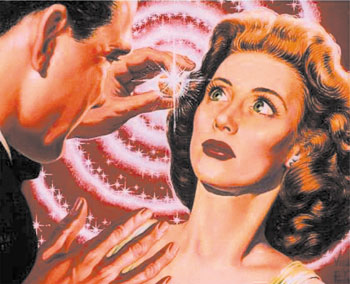
Afraid not — although all those old Hollywood movies would have us believe otherwise.

Hypnotists don’t have any special powers. They simply have the knowledge and experience to help induce a deep state of relaxation, and deliver the right kind of message to your inner mind.

Effectively, all hypnosis is *self-hypnosis*. You’re the one doing the work and changing your thought patterns. The hypnotist (or the hypnosis recording) simply facilitates the process.

—-

“Hypnosis only works on weak-minded people!” 

Wrong way round! It’s actually those who can focus and have a more creative mind that get the best results with hypnosis.

That’s because all hypnosis is self-hypnosis. You’re not being influenced by someone else. You’re actually guiding yourself. And those people with greater focus and imagination get much more powerful results with that process.

In an article for Psychology Today, Dr Deirdre Barrett, Ph.D wrote an article titled ‘The Power of Hypnosis’, in which she noted that “modern research shows that hypnotizability is correlated with intelligence, concentration and focus.”

—-

“During hypnosis, you can be made to do things against your will!” 

Totally untrue. Your personal values and beliefs always remain intact during hypnosis.

With hypnosis, you simply allow yourself to enter into a state of heightened suggestion. At that point, you can ‘reprogram’ your thinking patterns. You’re the active participant in this. If a hypnotist tries to tell you to do something that goes against your values, you’ll naturally reject it and jump out of your trance-like state.

—-

“You can get stuck in a hypnotic trance and never wake up!” 

This one is getting so old now, it’s almost funny. You can absolutely never get stuck in any form of ‘hypnotic trance’!

There has never ever been a single recorded case of this. The state you reach during hypnosis is similar to that of day-dreaming. You’re just super-relaxed. You can ‘wake up’ again whenever you want to. Usually that will be at the end of the session, when guided to do so by the hypnotherapist.

—-

“Hypnosis goes against my religion! This is the occult!”

Hypnosis doesn’t go against any religion at all, and it isn’t what some consider the “occult.” Hypnosis is simply a safe and natural method of relaxing your mind, and feeding yourself with positive affirmations and ideas.

Hypnosis is a branch of psychology, and has absolutely zero connection to any religion whatsoever.

—-

“Hypnosis isn’t really effective at changing anything!” 

Another myth. There have been countless studies that have proved the efficacy of hypnosis in a wide variety of settings.

Hypnosis was approved for medical use in 1958 by the American Medical Association, and almost all modern hospitals now utilize hypnosis to some degree. It has a reported 90.6% success rate in stopping smoking. (The University of Washington School of Medicine.) It was found to be over 30 times more effective than regular weight loss routines. (Journal of Consulting and Clinical Psychology.) It was found to bring ‘immediate’ and ‘significant relief’ to 75% of women who used it to assist with their IBS symptoms, with 80% still reporting improvement up to six years later. (American Psychological Association.)

It has also been proven to dramatically reduce migraines, speed up recovery from surgery, reduce the intensity of pain, help overcome drug addiction, relieve chemotherapy symptoms, and lower blood pressure. It’s been found to be as effective as Ritalin in treating ADD in children. And those are just a few of the actual medical applications!

Hypnosis has also been used by thousands worldwide to improve confidence and self-esteem, release addictions, let go of fears and phobias, lose weight, stop smoking, improve brainpower, and much more.

A research study by American Health Magazine found hypnosis to be more effective than other forms of self-change, such as behaviour therapy and psychoanalysis. It reports that hypnosis had a 93% success rate after just 6 sessions — compared to behaviour therapy with 73% after 22 sessions, and psychoanalysis with 38% after 600 sessions.

—-

Hypnosis is a fascinating subject that has long been surrounded with too much Hollywood myth. 

We hope this post has helped to clear up a few misconceptions!

We look forward to seeing you again soon at the Hypnosis Live superstore:

–> Access your FREE Hypnosis Session

These two wolfs will teach you a lesson today

An old Cherokee is teaching his grandson about life. “A fight is going on inside me,” he said to the boy.

“It is a terrible fight and it is between two wolves. One is evil – he is anger, envy, sorrow, regret, greed, arrogance, self-pity, guilt, resentment, inferiority, lies, false pride, superiority, and ego.” He continued, “The other is good – he is joy, peace, love, hope, serenity, humility, kindness, benevolence, empathy, generosity, truth, compassion, and faith. The same fight is going on inside you – and inside every other person, too.”

The grandson thought about it for a minute and then asked his grandfather, “Which wolf will win?”

The old Cherokee simply replied, “The one you feed.”

Inspired from JT deBolt and Kaelin